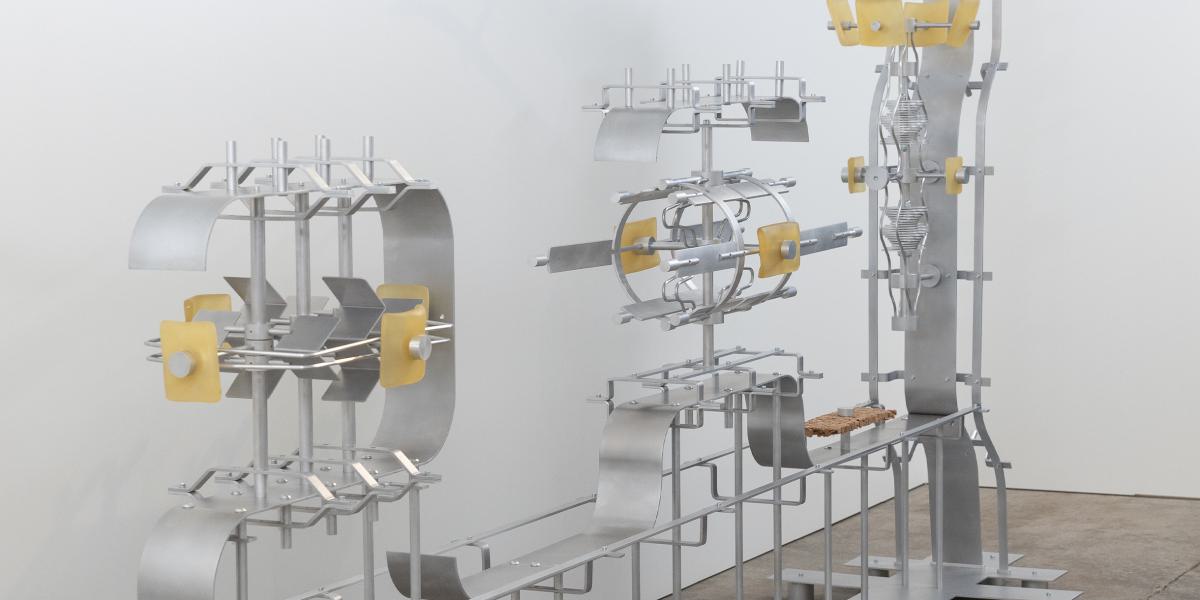
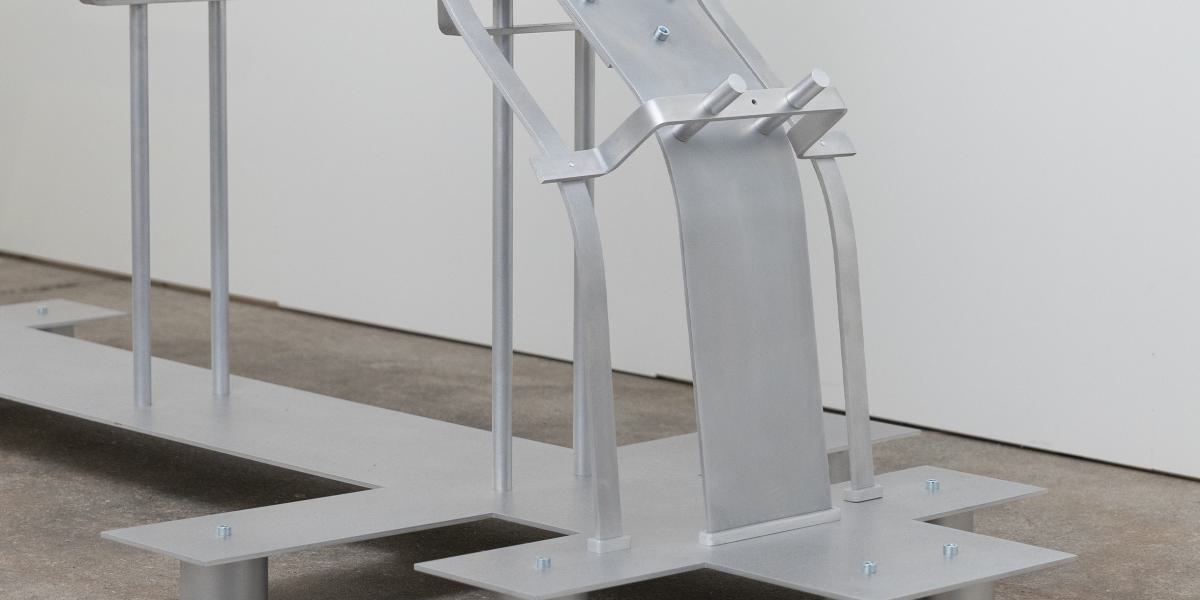
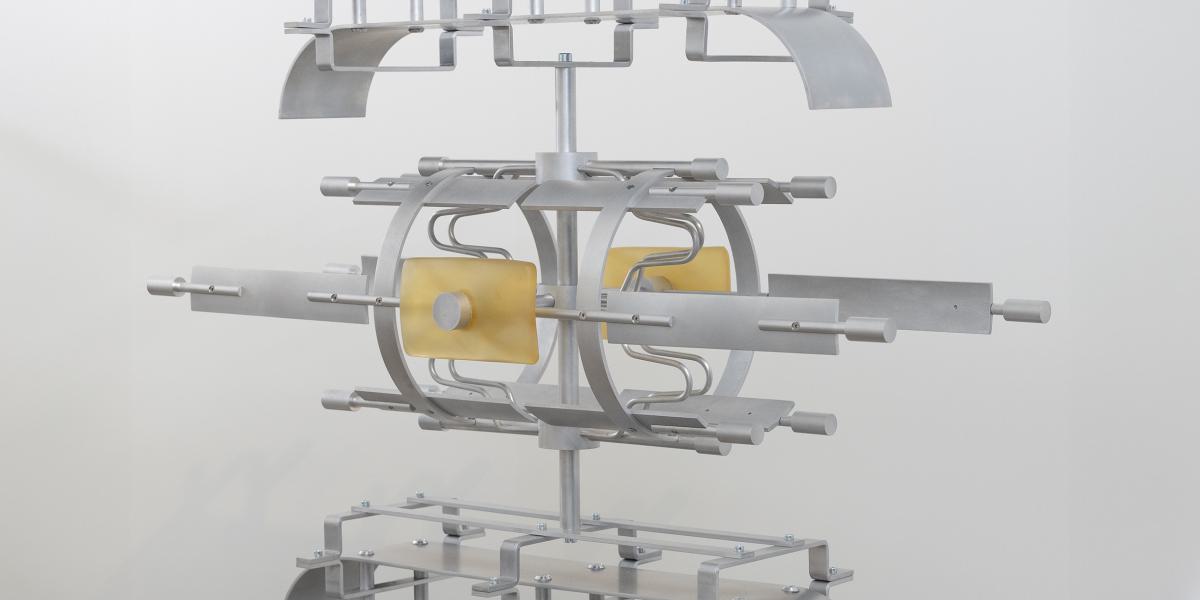
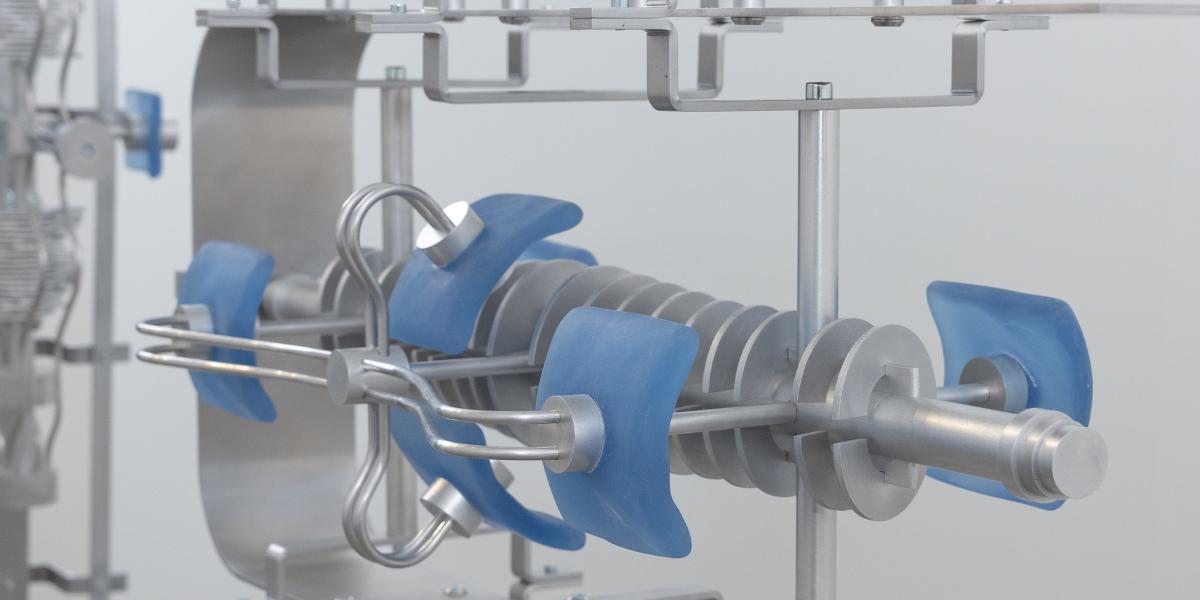
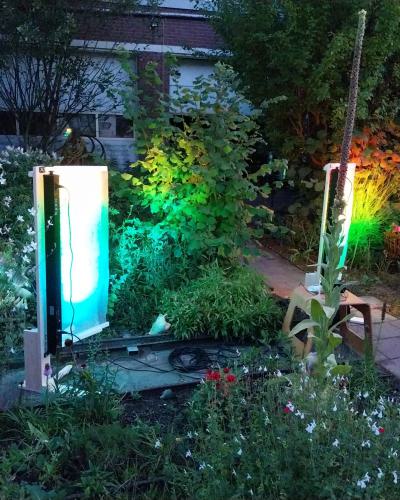
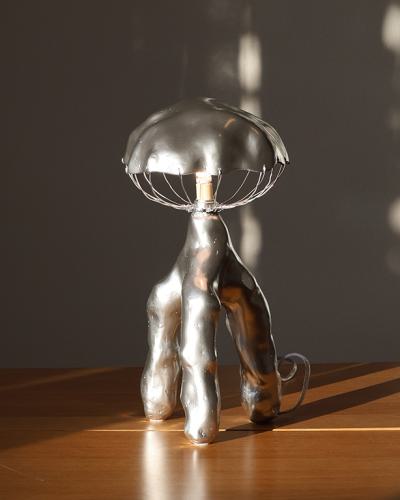
In Second Matter, designer Maximiliaan Schevenhels takes the structures and logic of Quick-Step’s industrial recycling processes out of their functional context, turning their connections and rhythms into two autonomous aluminium installations.
Industrial Origins
Second Matter consists of two aluminium installations that extend parallel to one another across the space. Although their function is not immediately apparent, their forms and technical nature suggest an industrial origin. That origin lies deep within Quick-Step’s recycling centres, where old flooring is dismantled, separated into different material streams and processed into raw materials for new flooring as part of a circular production process. Each installation follows one of these material streams, tracing the recycling process of HDF on one side and PVC on the other.
From Process to Structure
Driven by Quick-Step’s ambition to open up its recycling processes, Maximiliaan translated their underlying logic into a spatial structure. Comprising a network of precision components, aluminium structures, curved elements and cast forms, the work gradually becomes denser at various points. Lines converge, supports multiply and the construction becomes visibly more complex. These concentrations then dissolve again, allowing the structure to become visually lighter. This alternation between densification and dissolution reflects one of the fundamental characteristics of the recycling processes from which the work originated.
This underlying logic remains clearly present, while its original functionality is absent. Nothing is produced, nothing is transported and nothing is processed. By removing this function, the focus shifts to the structure itself. Connections, transitions, tensions and rhythms that often go unnoticed within an operational process come to the fore. The installations form a landscape that invites a different way of looking and observing.
An Autonomous Language
The design of the installations grew out of observations on the production floor, discussions with engineers and Research & Design teams, and research into the techniques and logic behind Quick-Step’s recycling processes. Techniques from mechanical engineering, such as turning and milling, were also adopted and applied in the design of the installations. By translating these working methods into a spatial language, the installations came to embody their precision, rhythm and material strength.
At the same time, they develop their own internal logic. Connections are extended, structures branch out, and forms emerge that no longer have a direct equivalent within the industrial reality from which they originate. As a result, the installations establish an autonomous existence, separate from the processes and machines from which they were born.
About Maximiliaan Schevenhels