Camera cars, sensors in public spaces — who decides how this technology is used? Find out how you, as a civil servant, designer or public participation professional, can meaningfully involve residents in decisions about technology in the city.
Co-creation Cycle for the Smart City
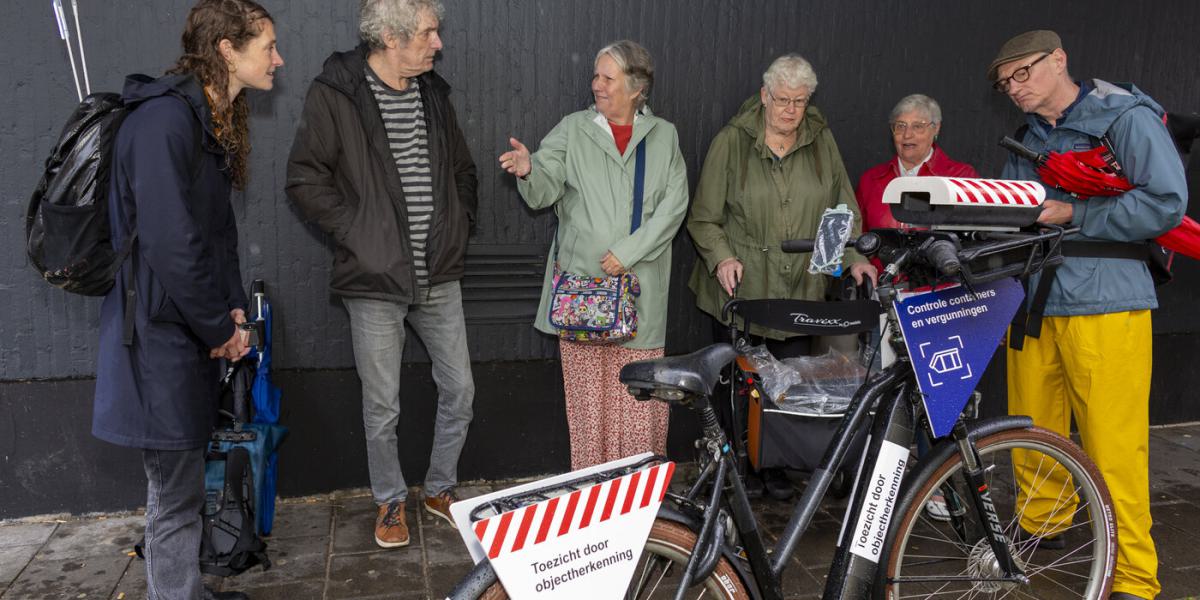
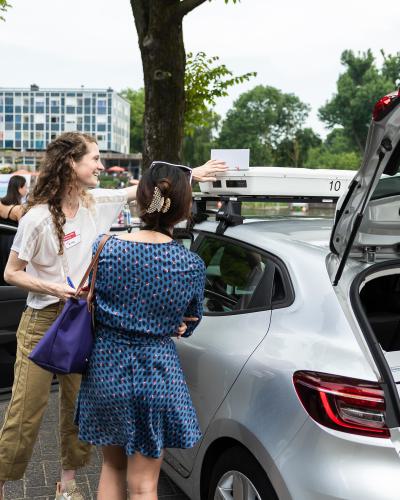
Technology in public spaces is constantly evolving. Parking scan vehicles will soon be able to recognise not only parking spaces but also broken lampposts, and complaints about public spaces submitted by telephone will now be sorted automatically. Technological applications are conceived, created, and deployed—and then continue to evolve, along with the city around them. New functions are devised, or people get stuck in interactions that do not (yet) fit well with reality.
Yet municipalities often treat the deployment of technology as a project: something with a beginning and an end, a delivery and a close. In “Residents-in-the-Loop: Deciding Together on AI in the City,” we view the development and implementation of urban technology as an ongoing process. To address this, we developed the Co-Creation Cycle for the Smart City: a process in which defining, creating, and evaluating follow one another in a continuous cycle.
Shifting values call for an ongoing conversation
Public values, such as privacy, fairness, and transparency, in theory form the framework for the implementation of urban technologies. But these values are not a fixed given. They require ongoing engagement: a continuous public conversation about what they actually mean in the context of the task at hand. What does privacy mean when designing a scan car or a smart traffic light? What exactly does transparency mean? Is it enough to register an image-recognition algorithm used in public space in a register? Or should it also be explained in an understandable way? Should the way it works be made transparent, and if so, at what level of detail? In short, an appeal to public values will, in most cases, quickly lead to a series of questions. What do we consider important? What does the technology do? And do the two actually align?
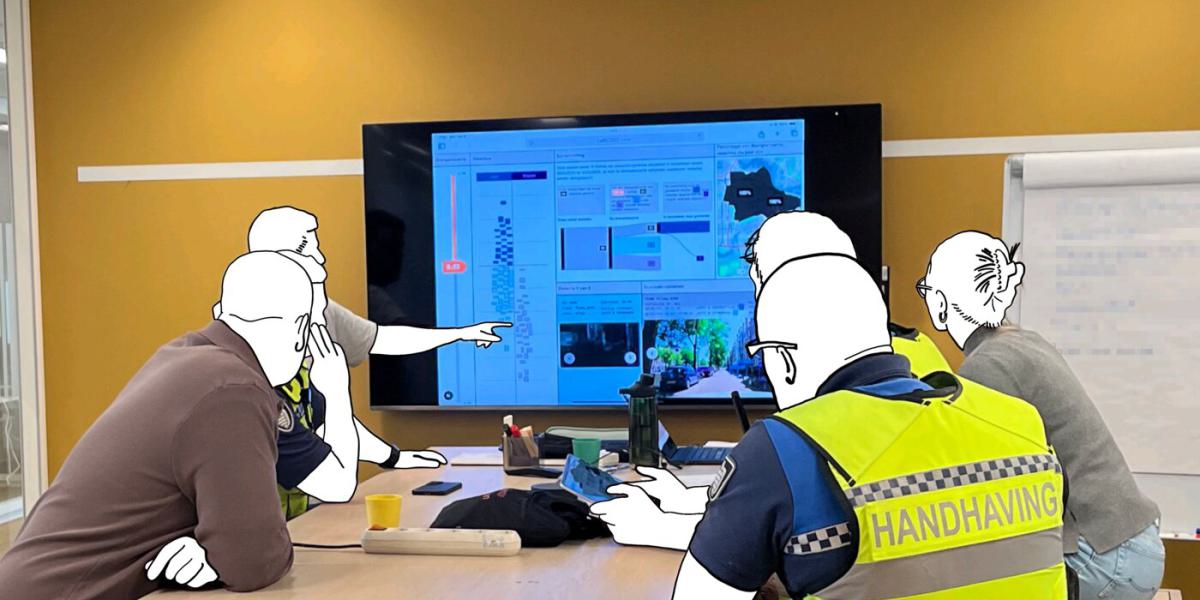
The methods we developed in the exhibition, and workshop focus on involving residents in answering these questions. Residents should be able to understand what a system does and know how they can give feedback or raise the alarm.
All methods we developed are also documented in a handbook which you can pickup at the exhibition space or download.
Join the workshop
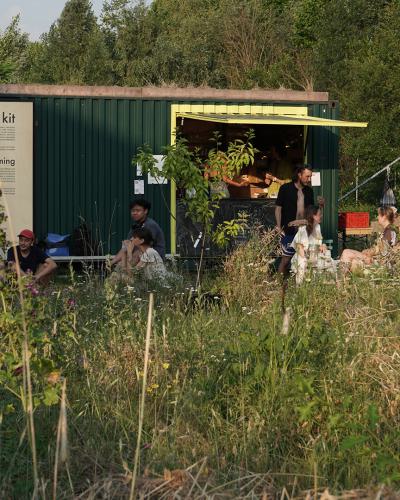
On Wednesday 21 October, from 14:00 to 15:00, we are hosting a Bewoners-in-the-Loop workshop at the central DDW plaza, at The Square (Designing Society expo).
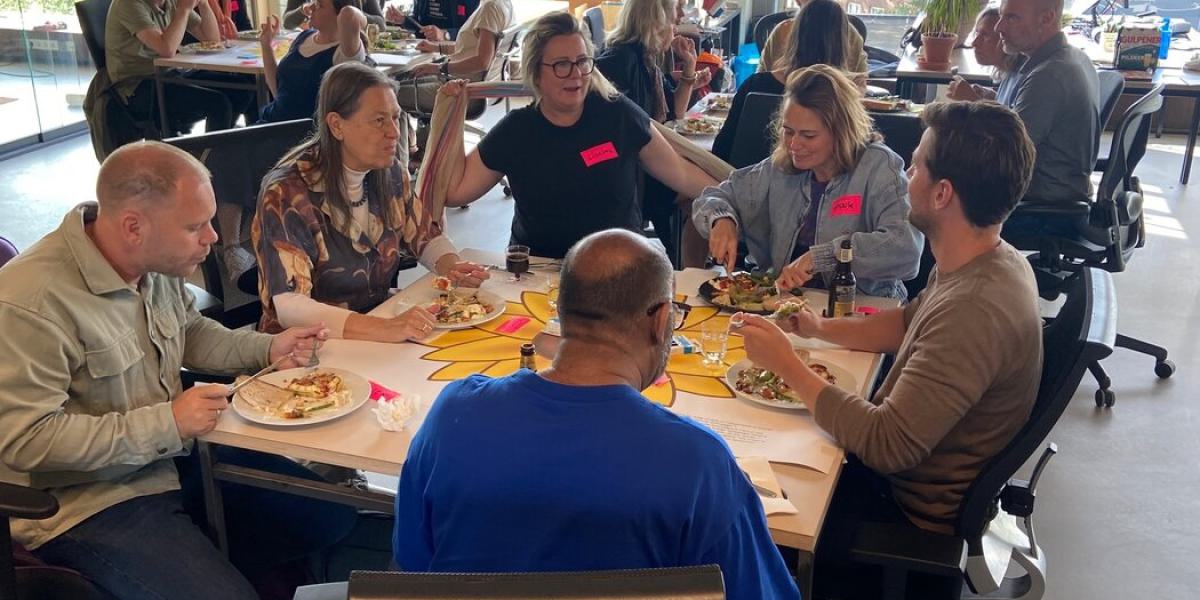
The workshop focuses on how a municipality can meaningfully involve residents in decisions about AI and technology in the city. You will work on a project, possibly one of your own, and you'll discover how to meaningfully involve residents in the conversation about the use of technology in the city. You will leave with practical tools, examples, inspiration and a copy of the handbook Bewoners-in-the-loop ("Residents-in-the-Loop").
The workshop is developed with civil servants and professionals working in innovation, design, and participation in mind. Are you interested but working in a different discipline? Feel welcome to join too!
Sign up here (copy/paste link in browser): https://forms.cloud.microsoft/pages/responsepage.aspx?id=HrsHCfwhb0eIQwLQnOtZp8U7UW1GZI5FkWHI5oLatYRUQVAwVDBHUFNZT0xGUUNESkk1SkU5VE5BQy4u&route=shorturl