Inspired by Goethe's concepts of Urbild and Urpflanze, this project reinterprets traditional plant dyeing as a design method for bio-based material development through urban plant observation, embodied craft knowledge and biomaterial experimentation.
Design Method
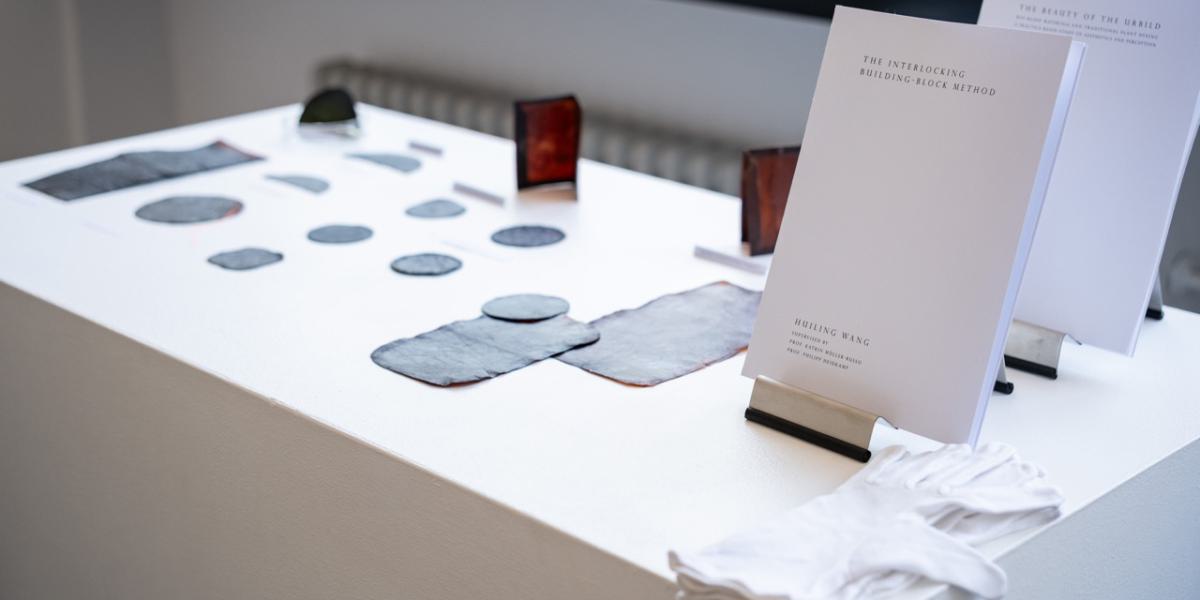
The project develops an Interlocking Building-Block Method that brings traditional plant dyeing into bio-based material development. Instead of treating craft as a fixed workflow, dyeing and finishing processes are broken into reusable Action Units such as soaking, heating, fermenting, coating, drying and boiling. Condition Units describe the material state and key parameters at specific moments, including temperature, duration, concentration, pH and moisture. The units can then be recombined to create adjacent variant experiments and to make connections and boundary conditions visible. The method is built through field research, embodied craft learning and material experimentation. Rather than reproducing an existing craft process, it makes traditional material knowledge visible, comparable and adaptable, opening new pathways for combining craft with bio-based materials.
Material Experiments
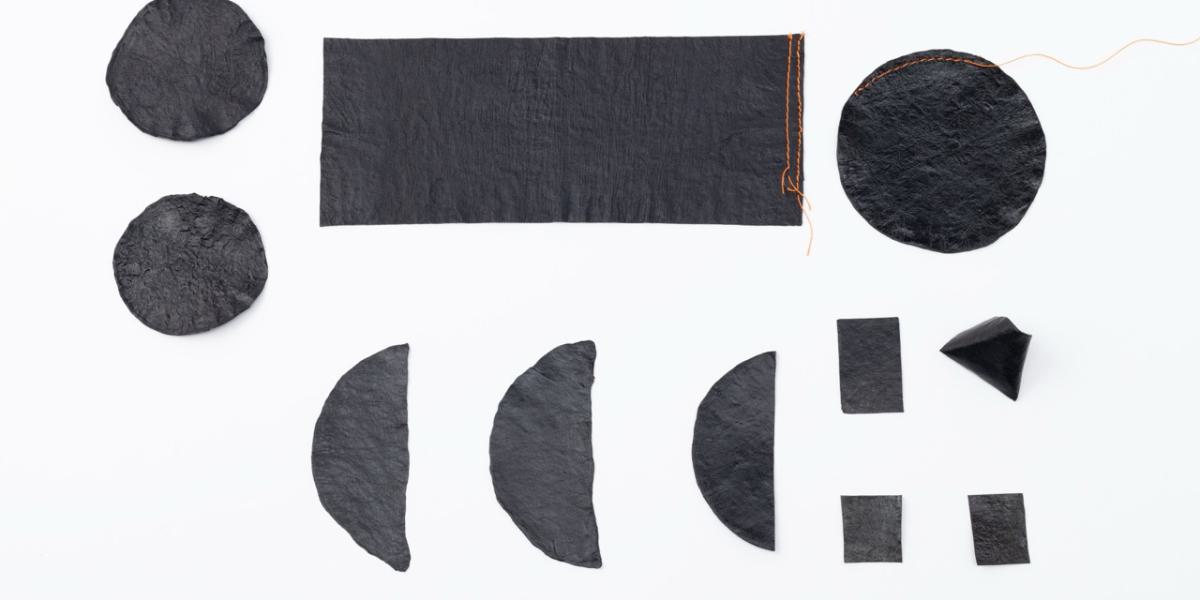
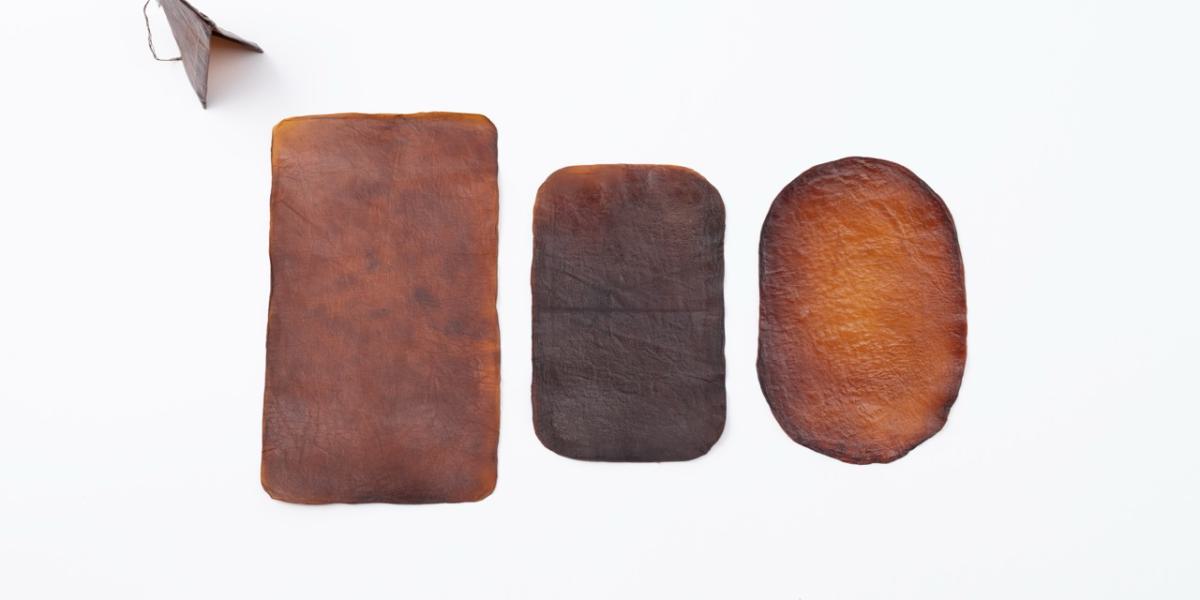
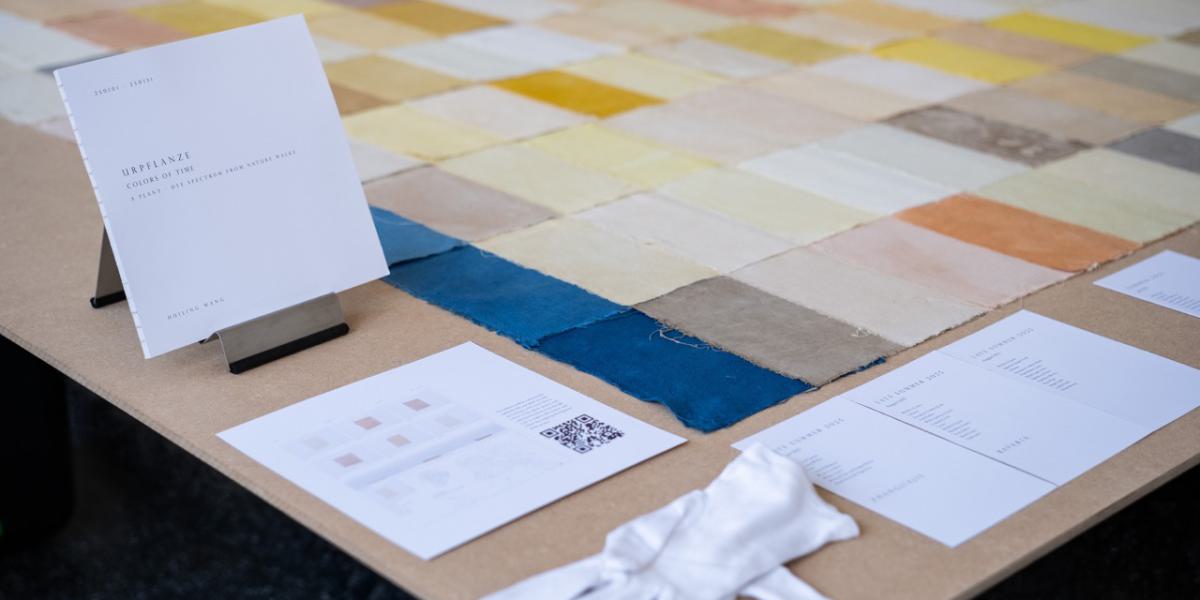
The research unfolds through three practice-based projects. Urpflanze: Colors of Time uses urban foraging and hot dyeing on cotton to trace seasonal colour, place and time through plants, supported by mood notes, a book, a website and a geo-tagged plant map. Kombucha Bio-Leather × Indigo combines bacterial cellulose with fermentation-based indigo dyeing, testing how biomaterial formation and dyeing processes can intersect and produce new material properties. The third project, Iris × Traditional Plant Dyeing × Printing, developed within a plant-dyeing course, translates close observation of the human iris into colour and form through natural dyeing and traditional printing. Together, the projects move between observation, embodied craft knowledge and experimentation, showing how traditional processes can become a basis for new bio-based material workflows.
Aesthetic Fragments
The project also investigates the aesthetic and perceptual qualities that emerge through changing materials. Rather than understanding beauty as a fixed image, it approaches Urbild as an ongoing process of becoming, where beauty can appear through metamorphosis itself. Across the research, recurring aesthetic qualities include transparency, natural forms, imperfection, fragility, unevenness, tactile texture, beauty maintained through care, beauty evolving over time, uniqueness, uncertainty and contingency. These qualities are explored through first-person aesthetic notes and through participants’ responses in natural dyeing workshops. The project therefore asks how bio-based materials and traditional craft can create sensory and emotional experiences that are not based on uniformity or permanence, but on close attention to material change, time and relation.